Comprehensive Title Insurance & Escrow Services
Plymouth Title Guaranty Corporation is a Chicagoland title insurance and escrow agency based in Chicago, Illinois. Our firm issues title policies, clears property liens, and performs nationwide tract searches. With 21 offices throughout the state and remote closing capabilities, we provide fast, reliable service, including rush and weekend requests. Trust us for efficient, accurate real estate closings.
-
Real Estate Closings
-
Attorney Agent Program
-
After-Hours Closings
-
Mobile Closings
-
Underwriters
-
Title Clearance
-
Online Orders
Plymouth Title Guaranty Corporation Operates 21 Convenient Offices Throughout the Chicagoland Area
Our experienced staff provides fast, reliable service for residential and commercial needs.
With flexible remote closings and options for rush and weekend services, we ensure an efficient closing process for all clients.
Online Ordering with Industry-Leading Turnaround Times. Place Your Order Today!
Meet Plymouth Title’s Proud Partners
Comprehensive Service Solutions
Plymouth Title Guaranty Corporation offers a full spectrum of residential and commercial title products and escrow services, positioning ourselves as your go-to resource for title needs in Illinois. Our commitment to expertise and delivering exceptional value makes us a trusted partner for all your real estate transactions.
Reliable Underwriting Partnership
We are proudly underwritten by Fidelity, First American, and WFG—three of the most trusted title underwriters in the United States. This partnership ensures our policies are backed by substantial claims reserves and supported by a skilled team of underwriters and claims litigators, providing you with unmatched reliability and peace of mind.
Customer-Focused Support
Dedicated to exceeding customer expectations, we prioritize personalized service tailored to your needs, ensuring your questions and concerns are handled with efficiency and care. To provide added convenience, we offer mobile closings and flexible after-hours closings, making it easier than ever to complete transactions on your schedule.
Catch up on the Latest Industry News
Our Industry News section keeps you informed on the latest trends, insights, and key developments in the title insurance and escrow industry. With regularly updated blogs, we provide valuable content covering market shifts, regulatory changes, industry best practices, and emerging innovations. Whether you're a professional looking to stay ahead of compliance updates or a consumer seeking clarity, our coverage ensures you have access to the most relevant, accurate, and actionable information.
Stay ahead of the curve with our in-depth articles, expert analyses, and timely updates, thoughtfully crafted to support the evolving needs of industry professionals and help businesses navigate the ever-changing landscape with confidence.

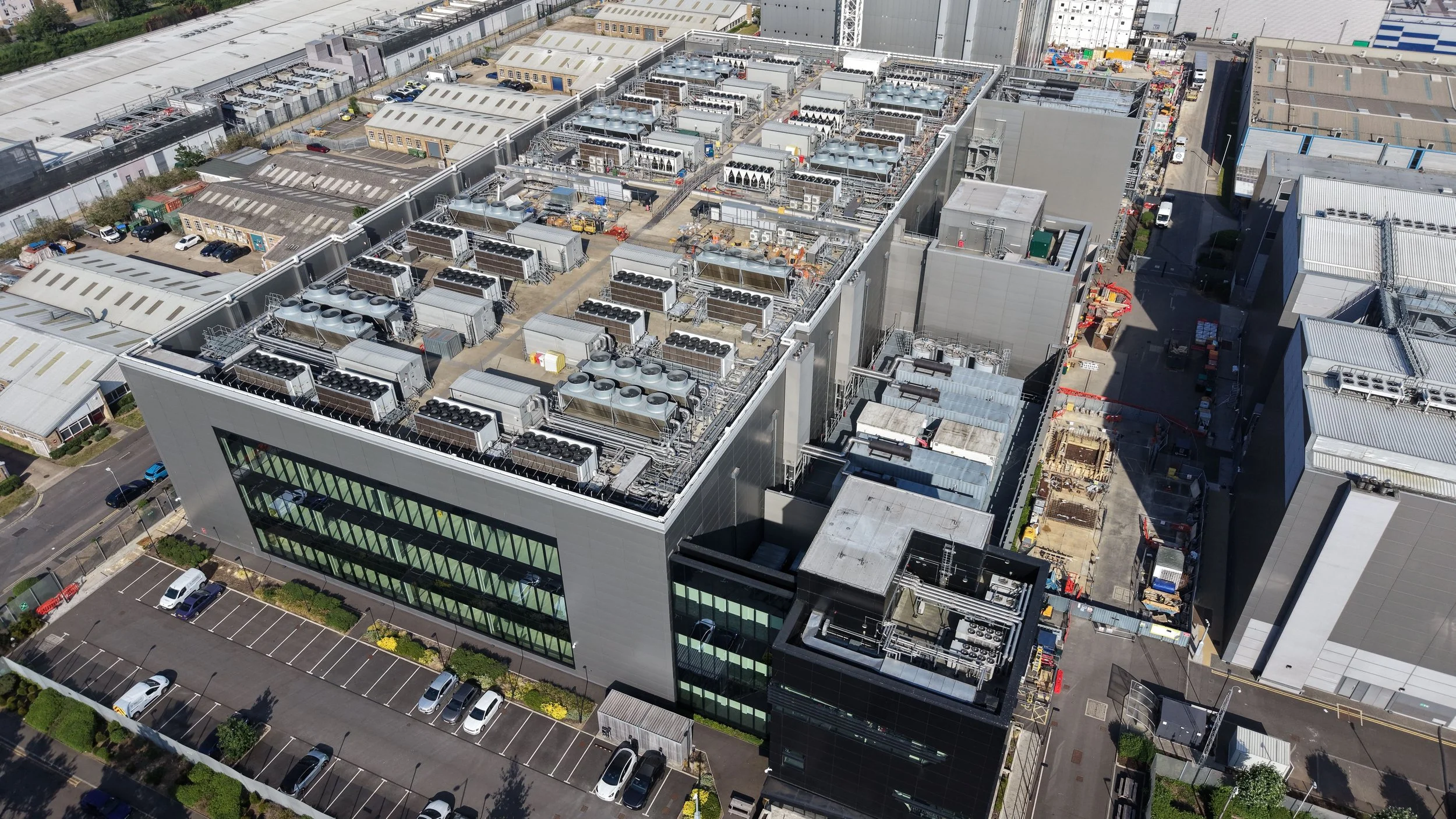
Illinois data center development is reshaping the commercial real estate landscape across Chicagoland…and the activity shows no sign of slowing. Driven by far more than artificial intelligence, demand for data center capacity continues to surge. For real estate professionals, investors, and the title industry, this growth signals a wave of complex commercial transactions. Understanding what fuels the trend, where it is landing locally, and what risks it carries helps everyone involved prepare for closings that move smoothly from contract to keys.
The May 2026 housing market is sending a clear signal to the greater economy. Overall, real estate momentum is building heading into the summer. Of course, this is despite persistent affordability pressures. Notably, home sales climbed to their highest level in months. Also, buyer demand saw signs of strength heading into summer. But the biggest headline for the warmer months is that more sellers returned to the market.
The Illinois Clean Slate Act introduces a new chapter in how the state handles record sealing, and its ripple effects extend beyond the criminal justice system. Signed into law by Governor JB Pritzker on January 16, 2026, the Act automates the sealing of certain non-violent criminal records after a designated waiting period. For real estate professionals, lenders, and the title industry, the law raises an important question: What happens when more records become shielded from public view?
The April 2026 housing market sent mixed but meaningful signals to buyers, sellers, and real estate professionals heading into summer. A wave of national data released in late May paints a nuanced picture.
The rollout of the title acceptance pilot marks a major shift in the mortgage lending and closing landscape across the United States. Approved by the Federal Housing Finance Agency, this targeted initiative permits government-sponsored enterprises such as Fannie Mae to waive the standard requirement for a lender's title insurance policy in certain low-risk refinance transactions. This pilot aims to reduce upfront closing costs for eligible homeowners who want to refinance their mortgages.
The March 2026 housing market reflected a period of significant cooling as homebuyers navigated a landscape defined by persistent economic volatility. Data from the National Association of Realtors indicates that activity levels struggled to gain momentum during what is typically a busy spring season for real estate.
The spring homebuying season is the most competitive stretch of the year in the Illinois real estate market. For buyers across Chicagoland, that competition comes with real risk. According to Illinois REALTORS, the median home price hit $310,000 in April 2025, a 6.2% increase from the prior year. Inventory rose to 17,819 homes, but supply still trails demand, pushing buyers to make faster decisions with less margin for error. Amid all that urgency, one critical protection consistently gets overlooked before closing day: title insurance.
The Illinois statewide zoning laws are undergoing the most significant transformation in decades as Governor JB Pritzker advances his Building Up Illinois Developments (BUILD) initiative. The proposal responds to a housing shortage that has become impossible to ignore: Illinois is roughly 142,000 housing units short, home prices have risen 37% over the past five years, and active listings have fallen 64%.
Spring title issues can delay or even derail the closing process, leaving real estate deals in limbo. Based on data from the National Association of REALTORS, 14% of closings are delayed and 6% are terminated altogether.
Title issues, such as document errors and liens, can put real estate deals at risk. To ensure smooth and timely closings, real estate agents must understand common title pitfalls and how to avoid them. Here are the top five Illinois title issues that can delay or derail property transactions.
The spring 2026 housing market is not what many Illinois buyers expected. As of late February 2026, 30-year fixed rates hover around 6.1%, according to Bankrate. Although it is lower than last year, affordability remains the main challenge. At the same time, in 2025, inventory was tight, and supply entering spring still fell well short of a balanced market.
As we progress through 2026, AI has found its place in real estate. Over the past couple of years, the idea of artificial intelligence rapidly transitioned from science fiction to reality. In our industry, AI is actively reshaping how property rights are protected. Moreover, it’s impacting how title issues are resolved. Even with this in mind, title insurance professionals owe a responsibility to their clientele to safeguard sensitive data before, during, and after the real estate closing process.
December’s 2025 housing market numbers looked better than November, at least on paper. For instance, sales across the country rose by 5.1%, reaching 4.35 million units according to the National Association of REALTORS. That data sounds okay, but when you look at the pending sales, which have dropped to their lowest level in months, it’s clear people still can’t afford homes.
The One Big Beautiful Bill changed the playbook for real estate investing by extending, expanding, and making permanent several major tax incentives tied to depreciation, energy efficiency, and opportunity zones. For Illinois real estate investors, the biggest shift is that Opportunity Zones are no longer just a short-term program with a looming sunset; the bill makes the program permanent and adds enhanced benefits for rural real estate starting in 2027, while also tightening compliance and reporting requirements for Qualified Opportunity Funds (QOFs).
With the full release of the November 2025 housing data, the metrics point to a market that’s slowly regaining balance. Price growth is cooling, buyers are testing the waters again, and contract activity is building into year-end. The most encouraging signal for affordability came just ahead of November, when the Federal Housing Finance Agency reported average home prices were up only 1.7% year over year in October.
Many experts anticipate a “2026 Great Housing Reset”, marking the beginning of a slow but meaningful shift in the United States housing market. This shift won’t be defined by a sudden crash or rapid rebound, but by gradual normalization after years of volatility.
With the full release of the October 2025 housing market data, the metrics told a story of a small, yet meaningful shift in momentum. Following a long stretch of uncertainty, real estate activity moved higher. It’s important to remember that real estate activity isn’t driven merely by mortgage rates. Household incomes, housing inventory, and everyday life as a whole create ripple effects across the market. On the consumer front, October resembled a market finding its footing.
Mortgage market activity often cools in late November as Americans shift their focus to holiday planning, travel, and year-end obligations. Yet this year tells a different story. November mortgage applications saw a slight but notable increase heading into Thanksgiving 2025, according to the Mortgage Bankers Association’s most recent Weekly Mortgage Applications Survey. Total mortgage volume was essentially flat overall, up just 0.2% from the previous week, but the internal movement within the data reveals deeper storylines beneath the headline figures.
Seller impersonation fraud has rapidly become one of the most alarming forms of real estate crime in the United States, targeting both commercial and residential property transactions. The practice generally involves a criminal posing as a legitimate property owner, using falsified identification documents and forged credentials to illegally transfer ownership to unsuspecting buyers. Ultimately, fraudsters steal the sale proceeds, leaving both the buyer and the rightful owner in legal and financial chaos. These schemes often involve “impersonating the actual owner and recording fake or forged documents in local land records,” resulting in equity loss, property theft, and costly litigation for victims.
Real estate wire fraud remains one of the most common and costly cybercrimes in the United States, especially during property closings, where large sums of money are transferred quickly and often electronically. Each October, as part of Cybersecurity Awareness Month, it’s essential for buyers, sellers, lenders, and title professionals to understand how wire fraud happens and what steps they can take to prevent it.
As of October 1st, 2025, the United States government has once again shut down, creating immediate aftereffects for mortgage rates and the real estate industry as a whole. Although most real estate transactions can still proceed, gaps in federal data, temporary program lapses, and broader market uncertainties create a ripple effect of repercussions. These elements influence pricing, timelines, and the overall closing experience for buyers, sellers, and professionals across Illinois.
August 2025 mortgage rates drifted toward the year’s lows as disinflation firmed, and Treasury yields eased. Headline CPI rose 0.4% month over month and 2.9% year over year in August, while core CPI increased 0.3% and 3.1%, respectively. Producer prices told a similar story. Final-demand PPI edged down 0.1% in August and was up 2.6% annually; core PPI rose 0.3% monthly and 2.8% year over year. Together, these cooler inflation readings reduced rate pressure into early September.
The Homebuyers Privacy Protection Act, signed in 2025, sharply limits how credit reporting agencies and competing lenders use mortgage trigger leads. For prospective Illinois homebuyers, the new law promises fewer unsolicited calls. Also, it clarifies consent around who may contact you after a mortgage credit pull.
Illinois NTRAPS, or Non-Title Recorded Agreements for Personal Services, have become a growing concern for homeowners across the state. These agreements, often disguised as harmless contracts, can create long-term legal and financial consequences that impact a property owner’s ability to sell, refinance, or transfer their home. Recent enforcement actions, including a lawsuit filed by Illinois Attorney General Kwame Raoul, highlight the deceptive nature of certain NTRAPS practices and the need for consumer awareness.
The June 2025 housing market reflects shifting dynamics in supply, demand, and pricing across the U.S. residential real estate sector. New home sales data, existing-home transaction trends, economic indicators, and pricing patterns offer insight into future activity levels and market direction heading into Q3 2025. A closer look at the latest reports reveals a market characterized by elevated inventory, moderate demand, and regional variations in performance.
Illinois land banks are public entities designed to acquire and restore vacant, abandoned, and tax-delinquent properties. Often, land banks comprise some of the most challenging assets in the real estate landscape.
The May 2025 housing market exhibited a combination of resilience and volatility, with new residential construction data revealing significant shifts that are important to homebuyers, sellers, lenders, real estate agents, and attorneys. According to the U.S. Census Bureau and the Department of Housing and Urban Development, total housing starts declined by nearly 10% from April to May, marking the lowest level in five years.
Real estate quishing is a growing cyber threat in 2025 that targets homebuyers, sellers, and title professionals during the closing process. Quishing—short for “QR code phishing”—is a modern twist on traditional email scams. Instead of clicking on suspicious links, victims are tricked into scanning fraudulent QR codes with their phones. These attacks are particularly dangerous in the real estate industry, where QR codes are now embedded in closing instructions, wire transfer requests, and digital communication.
The April 2025 housing market reflected a highly mixed landscape shaped by stubbornly high mortgage rates, increased builder caution, and evolving buyer behavior. Existing-home sales declined to the slowest April pace since 2009, while new home sales surprisingly jumped more than 10% from March, defying industry expectations. Although inventory levels are beginning to rise, affordability concerns and policy uncertainty continue to suppress overall transaction volume. According to data from the National Association of REALTORS®, the median price of existing homes reached a record $414,000, while new homes dipped slightly to $407,200.
Illinois Title Insurance Act regulation forms the backbone of the state’s protections for real estate transactions. Designed to govern the conduct of title insurers, agents, and escrow providers, the Act ensures that title services are conducted with transparency, integrity, and consumer safeguards. Title insurance companies play a critical role in safeguarding buyers and lenders from risks associated with property titles, supporting Illinois’s robust real estate market.
The March 2025 housing market reveals a complex but telling snapshot of today’s real estate environment. With declining existing home sales, a modest rise in new home purchases, falling housing starts, and a drop in mortgage applications, both buyers and sellers face a challenging landscape shaped by economic uncertainty and fluctuating interest rates.
Contact Plymouth Title Guaranty Corporation
Get in touch with Plymouth Title Guaranty Corporation for all your title insurance and escrow needs. Our dedicated team is ready to provide personalized solutions and answer any questions you may have—contact us today!
Corporate Headquarters: 6323 N Avondale Ave, B106, Chicago, IL 60631
Phone: (630) 300-3900
Email: info@plymouthtitleinsurance.com